Arrival / From the road to the room
Arriving well prepared
A peaceful first evening often begins before you leave home. Understand the last part of the journey, carry what you need and give yourself time to arrive in the light.
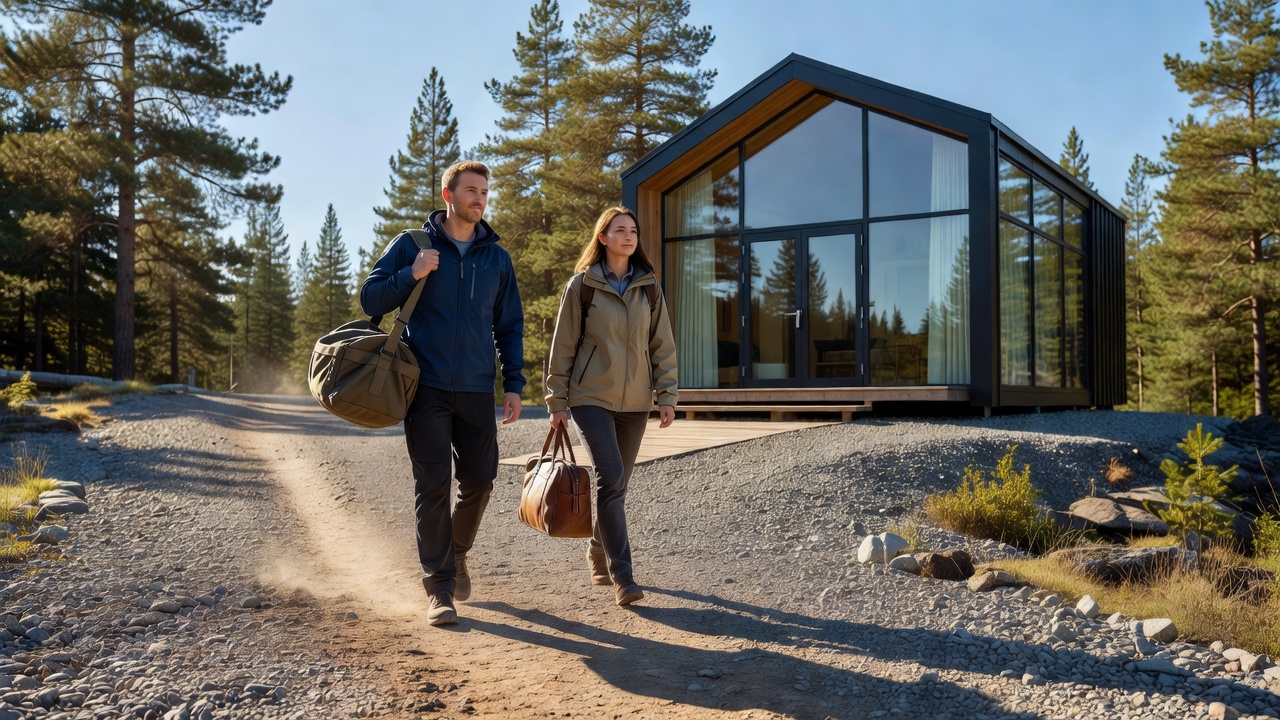
Separate the drive from the final approach
A map pin tells you where a cabin is, not how you reach its door. Ask the host to describe the route from the public road to parking, then from parking to the room. These may involve entirely different surfaces and levels of effort. A short distance can still include steep steps or an uneven path.
Request practical details: whether the road is paved, whether passing places are available and whether your vehicle is suitable. Do not assume that a rental car agreement permits every unsealed access road. Check the agreement yourself and ask the provider if the route creates uncertainty.
Make the directions available offline
Save the property’s written instructions, map location and contact details before entering an area with uncertain reception. A screenshot is useful, but a full set of instructions is better when the correct turn is not obvious. Confirm whether satellite navigation commonly sends guests to the wrong entrance or an unsuitable road.
If arrival requires a gate code, key safe or app, find out how it works without a mobile signal. Keep essential information somewhere that does not depend on one phone remaining charged. Share the arrival plan with your travelling companion so that navigation is not concentrated in a single device.
Ask access questions without making assumptions
Words such as “easy,” “nearby” and “accessible” can mean different things to different people. Describe your requirements and ask for measurable details. These may include the number of steps, the presence of handrails, the narrowest doorway, the gradient of a path and whether there is a level route into the bathroom.
Photographs of the approach and bathroom can help, but they do not replace a clear answer. If you use a mobility aid, travel with a child or find exposed steps difficult, resolve those questions before committing. You should not need to improvise a safe route after reaching a remote location.
Give weather a place in the plan
Check a current local forecast before travelling and ask the host what happens if the final route is unsafe. Strong wind, ice, heavy rain or snow can change the suitability of an approach. A booking confirmation is not evidence that every journey remains safe under every condition.
Aim for daylight arrival when possible, particularly if the route is unfamiliar. If you are delayed, contact the accommodation rather than rushing to meet an assumed check-in time. Do not cross barriers, flooded sections or closed roads. Follow official instructions and the property’s current access guidance, even if a navigation app suggests continuing.
Carry bags that suit the last few metres
A wheeled suitcase is convenient on a smooth corridor and less helpful on gravel or steps. Choose luggage you can manage safely on the actual route. Keep one hand available for a handrail where possible, and avoid carrying so much that your view of the ground is blocked.
Put waterproof clothing, a torch and any urgently needed medicine near the top of your bag. If luggage assistance is essential, arrange it in advance and confirm when it is available. Do not assume that a small, independently operated cabin has reception staff waiting at all hours.
Plan the first meal before the final turn
Remote accommodation may be close to a village on the map but far from an open food shop by the time you arrive. Check opening hours and the cabin’s cooking equipment before buying ingredients. Bring a simple meal that suits the facilities rather than relying on a restaurant being available late.
Ask whether tap water is suitable for drinking, how waste is handled and whether any supplies are included. If you have dietary requirements, bring essentials rather than assuming a small local shop will stock them. A little preparation leaves the first evening free for settling in instead of another drive.
Pack for the setting
Start with what the property supplies and add what your own needs require. Avoid packing emergency equipment as a substitute for choosing a suitable, safely accessible stay. The aim is ordinary preparedness, not turning a holiday into an expedition.
- Footwear with dependable grip and a waterproof outer layer.
- Offline directions, arrival details and the host’s contact number.
- A charged phone, charging cable and small torch.
- Personal medication and any essential dietary supplies.
- A simple first meal, if the facilities allow it.
- A sleep mask and familiar reading material for a quiet evening.
- A manageable bag for the path between parking and the door.
Before setting off, confirm the check-in window, the bad-weather procedure and how to report a problem. Once those questions are answered, arrival becomes part of the stay rather than a test you were not expecting.