Landscapes / Choose the experience
Which outlook suits you?
A sea cliff, a forested ravine and a mountain slope can all fill a window. The day you spend beside that window will feel very different in each.
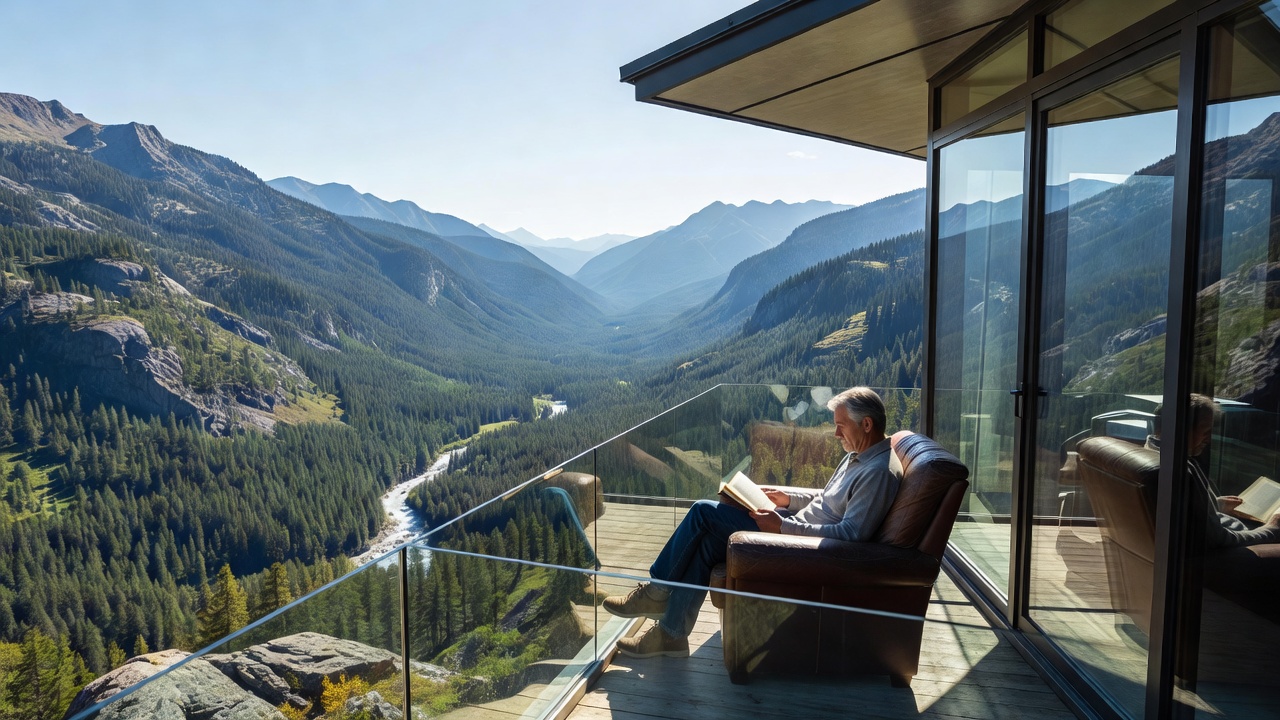
Start with how exposed you want to feel
Some guests want a horizon with almost nothing between the room and the sky. Others prefer a view framed by trees, a sheltered terrace and a clear sense of enclosure. Neither preference is less adventurous. Your response to height, wind and darkness should shape the choice before you compare the appearance of different cabins.
Look beyond the wide-angle photograph. Ask what is immediately below the window, how close you stand to an edge and whether an ordinary seated position still provides the view. A remote-looking panorama may have a road behind it; a wooded setting may feel more private despite being closer to services.
Coasts: movement, weather and open horizons
Atlantic coastlines such as Donegal, the Dingle Peninsula, the Faroe Islands and parts of the Isle of Skye illustrate the attraction of changing coastal light. Sea, cloud and rain can transform the same outlook within an afternoon. The benefit is variety; the practical trade-off is exposure to wind and moisture.
Ask whether doors and outdoor seating are sheltered and whether salt spray affects the terrace. Check current guidance for any coastal walks rather than assuming a visible track is a maintained route. Places such as the Cliffs of Moher are useful reminders that a dramatic edge is a landscape hazard, not an invitation to leave designated paths.
Fjords and mountains: scale with seasonal limits
Norway’s Hardangerfjord, Aurlandsfjord and Lysefjord offer examples of steep-sided landscapes where water and slopes share the view. The Lofoten Islands bring mountains close to the sea, while the Dolomites show how strongly a mountain setting can change with elevation and season. These are regional comparisons, not claims that particular cabins are available there.
In a steep valley, the direction of the slope affects direct sunlight. A room may receive less winter sun than a map alone suggests. Mountain access can also depend on road conditions, snow clearance and the last section of the route. Ask about the exact property, not the climate of the nearest large town.
Forests and ravines: a closer kind of outlook
A forest-facing cabin can feel calmer than an exposed cliff even when the ground falls away sharply. Tree trunks create a visual boundary, and foliage softens the light entering the room. Landscapes in the Black Forest, the Julian Alps and the wooded parts of the Scottish Highlands suggest this more enclosed relationship with terrain.
Season matters. Deciduous leaves can conceal a distant view in summer and reveal neighbouring buildings in winter. Shaded paths may stay damp, and insects can influence whether open windows are comfortable. Ask about screens, ventilation and the surface of the access route. “Surrounded by nature” does not describe any of those details adequately.
Dry escarpments: shade becomes essential
Dry, rocky landscapes such as the Alentejo interior, the Tabernas Desert region and the Bardenas Reales demonstrate a different kind of openness. Their appeal lies in long sightlines, textured ground and broad skies. In these settings, the relationship between glazing, sun and shade deserves especially close attention.
A large window facing strong sun can make a small room uncomfortable without effective shading and cooling. Ask how the cabin manages afternoon heat, whether outdoor seating has dependable shade and how drinking water is supplied. Cooler evenings do not remove the need for daytime temperature control. Follow local restrictions on fire, water use and access.
Compare the season, not just the destination
The same cabin can offer very different experiences in different months. Long summer daylight affects sleep; shorter winter days affect arrival planning. Rain may make a wooded route slippery, while strong wind can make an otherwise inviting terrace unusable. A landscape’s famous season may not be the season that suits your habits.
Use official regional resources as a starting point: Met Éireann for Irish weather information, Yr for forecasts and the Norwegian Public Roads Administration for Norwegian road information. Always check the relevant local service and ask the host about site-specific conditions.
Choose what you will enjoy when you stay in
If watching weather is your idea of a good afternoon, an exposed coastal outlook may suit you. If you want to read with the window open, a sheltered, screened forest setting may be more appealing. If you need nearby restaurants and easy driving, proximity to services should outweigh an extra degree of visual drama.
Write down three priorities before searching: perhaps privacy, a sheltered outdoor seat and a straightforward arrival. Then compare properties against those priorities. A view is most rewarding when the practical setting lets you settle into it.
A quick landscape comparison
Coast
Choose for changing light. Verify wind shelter and safe access.
Mountain or fjord
Choose for scale. Verify road conditions and seasonal sunlight.
Forest
Choose for enclosure. Verify seasonal sightlines and ventilation.
Dry escarpment
Choose for openness. Verify shade, cooling and water provision.