Comfort / Details that change the stay
Comfort beyond the photograph
You should not have to choose between a wonderful view and feeling at ease. Ask how the cabin manages light, heat, fresh air and privacy before you fall for its best angle.
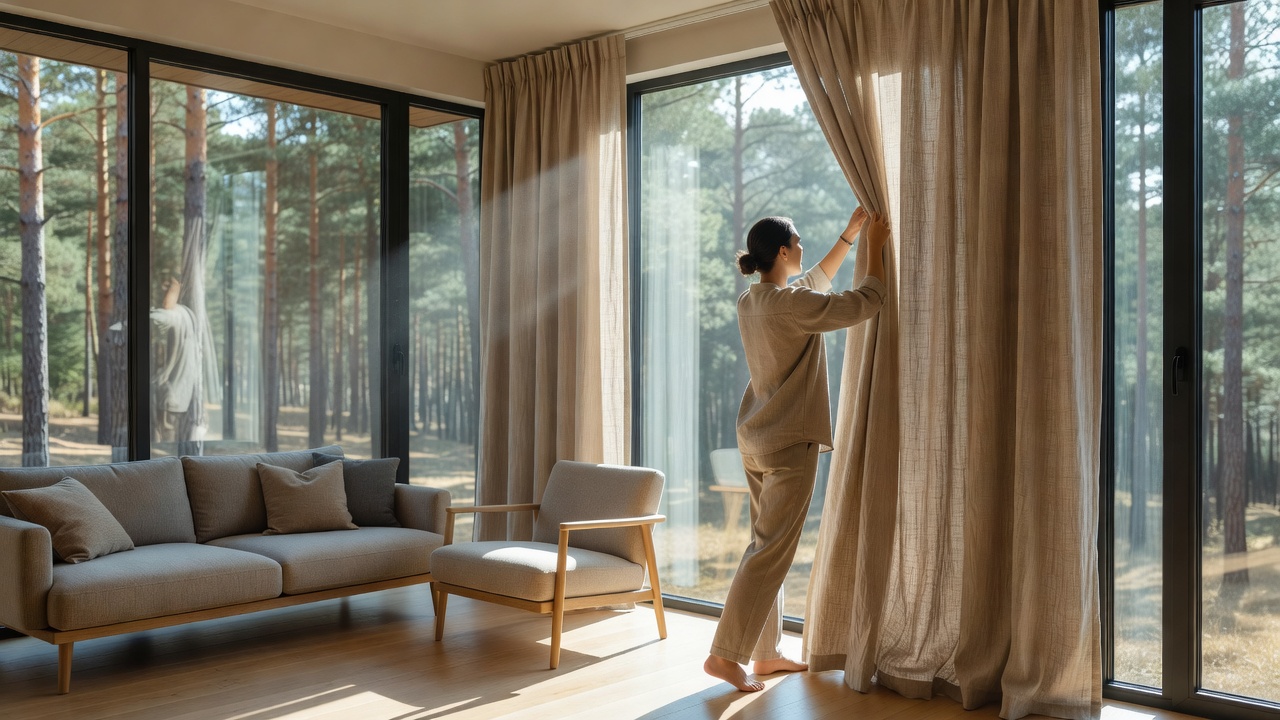
Privacy is a relationship between sightlines and light
A secluded setting can still have visible paths, neighbouring terraces or a service route behind the camera. Ask what can see into the sleeping and bathing areas, not simply how far away the next building is. Seasonal changes in foliage can also alter screening around a cabin.
Reflective glass is not a dependable substitute for curtains. Visibility changes with the balance of light inside and outside, and an illuminated room may become easier to see into after dark. Ask for full-coverage blinds or curtains and confirm whether they can be operated independently in different parts of the room.
Summer comfort begins with keeping excess sun out
Large glazed areas can admit substantial solar heat. External shade, the direction of the windows and the effectiveness of cooling all matter. A photograph taken on a bright morning cannot show how the room feels after hours of afternoon sun. Ask the host specifically about warm-weather performance.
An open door may not be a suitable cooling strategy if there are insects, strong winds or an exposed terrace. Find out whether there are opening windows, insect screens and a practical night-time ventilation arrangement. If you are sensitive to heat, request a clear description of cooling rather than relying on “airy” or “naturally comfortable.”
Winter warmth should reach the places you use
A heater can warm the air while a seat beside the glass still feels cool. Glazing quality, draught control and the position of furniture influence comfort near the window. Ask whether the cabin is designed and operated for the season you plan to visit, especially in exposed or high-elevation settings.
Check how heating is controlled, whether it is included and whether the bathroom is heated. You should not need to place belongings against a heater or use cooking equipment for warmth. Follow the accommodation’s instructions for every appliance and never cover heaters with wet clothing.
Fresh air and moisture need a route out
Cooking, showering and normal breathing add moisture to a compact interior. Ventilation helps remove it, but the system must work during the weather you are likely to encounter. Ask whether the bathroom has extraction and whether fresh air can enter without leaving the main door open.
Some condensation can occur when moist indoor air meets a colder surface; it is not, by itself, a complete diagnosis of a building problem. Persistent wet surfaces, a musty smell or visible mould deserve prompt attention. Report concerns to the host rather than blocking vents or changing equipment settings beyond the supplied instructions.
Rest depends on darkness, sound and layout
Long daylight hours can be a delight outside and a challenge at bedtime. Ask how dark the sleeping area becomes and whether roof glazing has its own blind. A sleep mask can help, but it should be a personal preference rather than the only response to a room that cannot be shaded.
Sound matters as well. Rain on a lightweight roof, wind around an exposed structure and mechanical equipment can be noticeable in a small room. If you are a light sleeper, ask about these sources directly. Also check whether the refrigerator or ventilation unit is immediately beside the bed.
Understand bathrooms and everyday boundaries
A compact bathroom should still let guests use it with dignity. Establish whether the enclosure is solid, whether a door closes fully and whether bathroom glazing is opaque or screened. “Open plan” can describe several very different arrangements, some of which may not suit friends or family members sharing a cabin.
Ask about hot-water provision if multiple guests need showers in succession. Check towel storage, drying space and the route from shower to bedroom. Small details become important when every activity shares a limited floor area. An elegant layout should support real routines rather than require constant rearrangement.
Treat safety information as part of comfort
Read the arrival briefing, identify the exit and find the property’s emergency instructions. Ask about terrace barriers, exterior lighting and safe routes if anything is unclear. Accommodation-specific information should explain relevant alarms and appliance use; a scenic setting does not reduce the need for ordinary precautions.
This guide cannot establish whether a building complies with local regulations. For specialist needs, ask the operator for suitable documentation or advice from a qualified professional. If the layout, exposure or access does not suit you, choosing somewhere else is a sensible decision. The right stay is one in which you can relax without negotiating a concern all weekend.